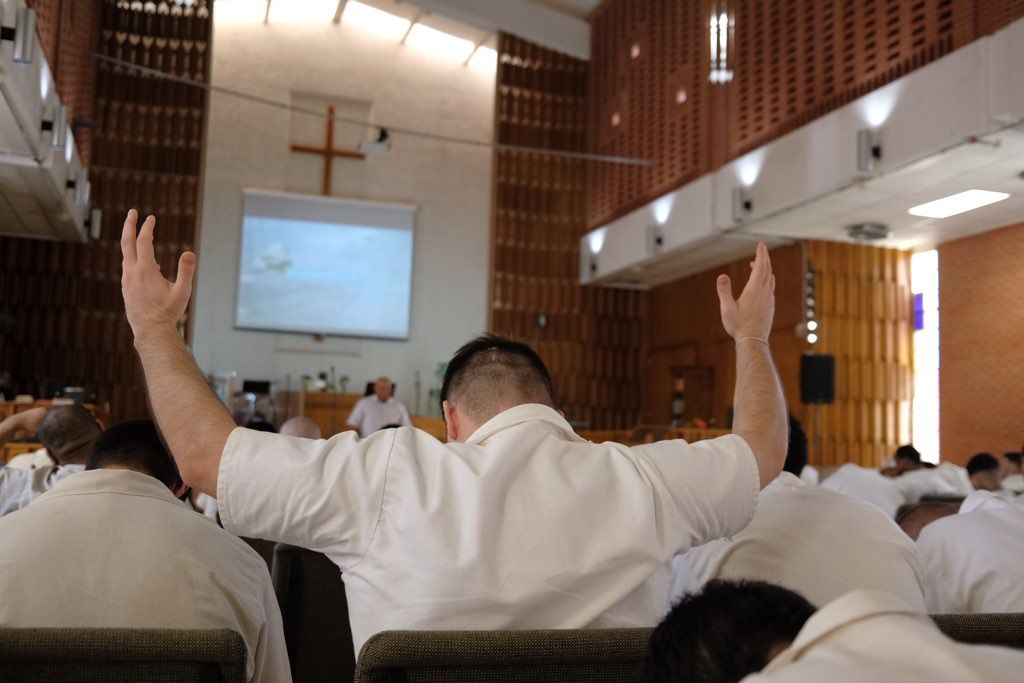
Transformation Behind Bars: Why Long-Term Prison Stories Matter
A post recently appeared on LinkedIn that I haven't been able to stop thinking about.
Written by Karen Brown from inside prison and shared by an advocate on her behalf, it marks a sobering milestone: on February 8th, Karen will have been incarcerated for 40 years.
Forty years. She entered prison at age 21 and will soon turn 62. As she notes with stark clarity, she has been behind bars since before Michael Jordan was rookie of the year, before the International Space Station, before cell phones and the world wide web, before 9/11.
But what stopped me wasn't just the length of time. It was how Karen chose to frame this milestone.
The Biblical Frame
Rather than marking 40 years with bitterness or despair, Karen draws on biblical narratives of transformation:
- "...it rained upon the earth for 40 days and nights before the rainbow was given.
- ...the Israelites wandered in the wilderness for 40 years for what would have taken 11 days to journey to the promised land.
- ...Moses fasted 40 days and nights and received the 10 commandments.
- ...Jesus fasted and was tempted by Satan for 40 days then began a ministry of salvation and forgiveness."
She concludes: "So today, I let 40 represent transformation, new life, growth, perseverance, and forgiveness."
This is theological witness at its finest—the capacity to interpret one's own suffering and growth through a framework of meaning that transcends the circumstances. It's exactly the kind of narrative I encountered again and again in my research on prison-based theological education.
But perhaps the most striking moment in Karen's reflection comes when she writes: "I was incarcerated before I realized that every decision we make has consequences that affect others more than ourselves at times."
This is moral reckoning. This is growth. This is the kind of transformation that our public conversations about criminal justice so rarely make space for.
The Conversation We're Not Having
Here's what troubles me: We hear a lot about wrongful convictions. We hear reentry success stories about people who got out, turned their lives around, and now run successful businesses or advocacy organizations. Those narratives matter deeply, and they deserve our attention.
But what about people like Karen? What about those serving long or life sentences who may never get out, yet who have experienced genuine transformation? What about the people who have grown, contributed to their communities, developed profound wisdom, and achieved deep personal change—all while knowing they may spend their entire lives inside?
We've largely written them off. We've decided their stories don't matter because they can't be packaged into neat redemption narratives that end with release and reintegration.
This is precisely why I conducted the research that became my book It's Changed What I'm Living For: Exploring Narratives of Human Flourishing from Inside America's Prisons. Over several years, I worked with participants in The Urban Ministry Institute's prison-based seminary program—people serving long and life sentences. I listened to their stories. I witnessed their growth. I documented their transformation through detailed narrative portraits of eight individuals.
What I found challenged everything our culture assumes about rehabilitation, redemption, and human worth.
What Transformation Looks Like When Release Isn't the Goal
The conventional metrics we use to evaluate "successful rehabilitation" are almost entirely focused on recidivism—whether someone reoffends after release. But what do we measure when release may never come? How do we recognize growth, change, and human flourishing when the usual markers don't apply?
The people I studied in my research, like Karen in her reflection, demonstrate something profound: transformation is not contingent on freedom. Human flourishing can occur even within the most restrictive circumstances. Meaning-making, moral development, community contribution, and spiritual growth are possible even for those who may never walk outside prison walls.
Karen has lived through the loss of her father, stepfather, grandparents, and friends during these 40 years. She has faced life threats. She has persevered. And she writes: "I pray that each day I earn respect and many will see and believe in redemption, restoration, and second chances."
Making These Stories Accessible
My academic book presents the scholarly research and detailed case studies, but I'm currently writing Changed for Life, which adapts this research into a narrative-driven work for general audiences. Because these stories shouldn't only live in academic journals and university press books. They need to reach people who make policy decisions, people who vote on criminal justice reforms, people who serve on parole boards, and people who simply want to understand what transformation looks like behind bars.
Stories like Karen's need to be part of our broader cultural conversation.
Why This Matters
When we only tell stories about the wrongfully accused or those who successfully reentered society, we reinforce a dangerous idea: that human worth is contingent on innocence or utility. That transformation only "counts" if it leads to release. That some people are simply beyond redemption.
But Karen's story, and the stories of the men and women I documented in my research, tell us something different. They tell us that human beings are capable of profound change regardless of their circumstances. That growth, wisdom, and contribution to community are possible even within prison walls. That every person's story matters, including those who may never get out.
Judge Gary Payne saw worth in Karen. Father Norman Fisher advocated and prayed for her until he passed. Organizations like Prison Radio, REimagine Justice, and Smart Justice Advocates continue to believe in her. Friends continue to see her as "much more than the tragic mistakes made at 21."
They're right to do so.
A Life Lived With Intention
Karen's 40 years represent not just time served, but a life lived with intention, faith, and perseverance through unimaginable challenge. Her witness matters. Her growth matters. Her story matters.
And so do the stories of thousands of others like her—people whose transformation we rarely acknowledge because it doesn't fit our preferred narratives about crime and punishment.
We need to expand the conversation. We need to make space for these stories. We need to recognize that human flourishing and genuine transformation are not contingent on release dates or parole boards.
Karen Brown has lived 40 years behind bars. And in that time, she has also lived a life of growth, faith, and becoming. That deserves to be seen. That deserves to be honored.
That deserves to be part of how we talk about justice, redemption, and what it means to be human.
Read the post on LinkedIn here: 40th Anniversary, by Karen Brown